
Japan as Birthplace and Home
The Character of RainThis flow traces how the Narrator (God) claims Japan as a personal home and then confronts the prospect of being forced to leave it.
increasing Bearing strength in each event
 decreasing
Bearing strength in each eventdecreasingBorn in Shukugawa
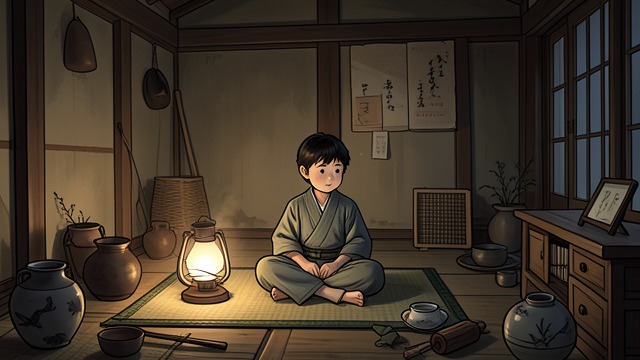
Born in Shukugawa
A place of beginning
The Narrator (God) identifies its awakening with a village in Kansai, where Grandmother offers White Chocolate. The remembered birthplace becomes the start of the child’s conscious life.
Home before nationality
At first, the child’s world is simply the house and its surrounding landscape. Japan becomes an intimate lived place before it becomes an idea about identity.
Claiming Japanese Belonging
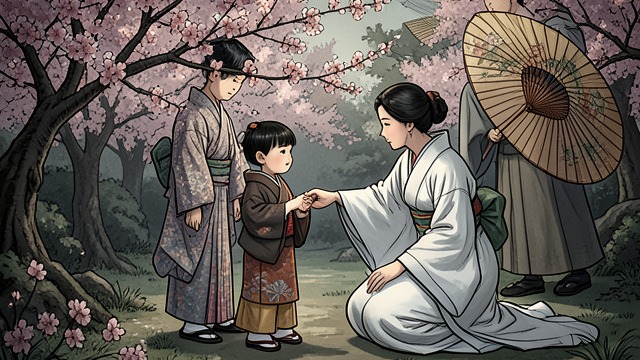
Claiming Japanese Belonging
A chosen community
Nishio-san treats the child with devotion, and the Narrator (God) embraces Japanese language, food, and custom. The child declares that it will become Japanese.
A private allegiance
This identity rests on affection and everyday beauty rather than ancestry. The child experiences belonging as a choice shaped by the people who make it feel adored.
The Garden Kingdom
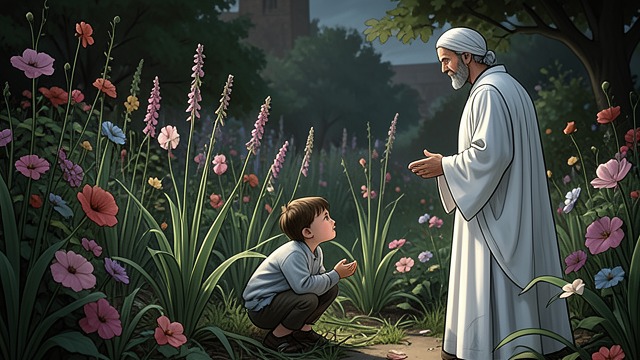
The Garden Kingdom
A sacred enclosure
The child treats the family garden as a temple and its plants as subjects. Blossoms seem to answer the Narrator (God)'s words, confirming a sense of divine authority.
Paradise with limits
The garden offers protection from the outside world, yet cannot guarantee permanence. Its seasonal changes foreshadow a vulnerability that the child does not yet know how to name.
The Coming Departure
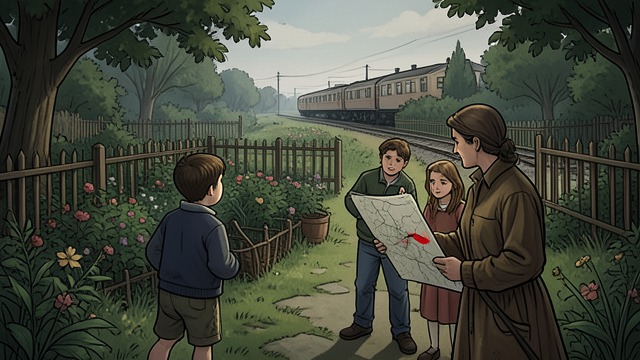
The Coming Departure
The family’s posting
Mother explains that Father’s diplomatic work will eventually take the family away from Japan. The child rejects the news, insisting that this is its country and its home.
A future becomes a loss
The threatened departure turns a beloved landscape into something that can be taken away. The Narrator (God) begins to understand that attachment makes future separation painful even before it occurs.
Memory as Homeland
Memory as Homeland
An urgent instruction
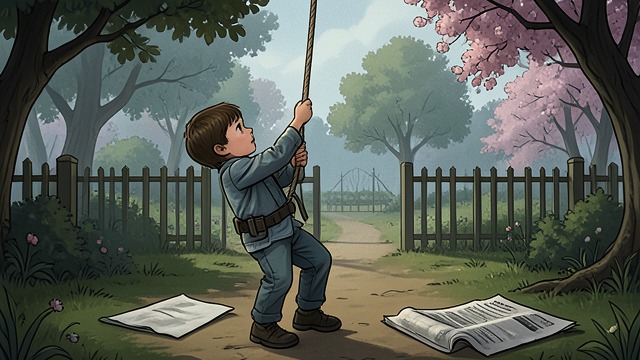
At the playground, the child repeats that it must remember. Memory appears as a way to preserve the garden, Nishio-san, and the life that will not last.
Carrying what cannot remain
The Narrator (God) cannot prevent a future departure, but can give lasting form to experience through recollection and writing. The inner life becomes a portable home.
February 1970
At age two and a half
Spring 1970
At age three, after Nishio-san's resignation crisis
After the departure is first announced
